Recognizing Activities and Involvement in Senior Care Communities
Business Name: BeeHive Homes of Plainview
Address: 1435 Lometa Dr, Plainview, TX 79072
Phone: (806) 452-5883
BeeHive Homes of Plainview
Beehive Homes of Plainview assisted living care is ideal for those who value their independence but require help with some of the activities of daily living. Residents enjoy 24-hour support, private bedrooms with baths, medication monitoring, home-cooked meals, housekeeping and laundry services, social activities and outings, and daily physical and mental exercise opportunities. Beehive Homes memory care services accommodates the growing number of seniors affected by memory loss and dementia. Beehive Homes offers respite (short-term) care for your loved one should the need arise. Whether help is needed after a surgery or illness, for vacation coverage, or just a break from the routine, respite care provides you peace of mind for any length of stay.
1435 Lometa Dr, Plainview, TX 79072
Business Hours
A great senior care neighborhood is not defined only by clean hallways, dependable medication assistance, or a well-run dining-room. Those things issue, obviously. But the difference locals and family members usually really feel most deeply is something less noticeable at first look. It is the rhythm of the day. It is whether a person has a reason to get clothed, an individual to sit beside, a task to finish, a song to hum in addition to, or a location where their passions still matter.
That is why activities and involvement should have major interest in any discussion about senior care. For numerous households, this is the part they did not recognize they needed to inquire about until they saw how much it shaped mood, cravings, sleep, self-confidence, and even physical stamina. In the very best neighborhoods, involvement is not an add-on. It is part of the care plan.
Why interaction transforms the day-to-day experience
A resident can have exceptional clinical assistance and still really feel lonely, bored, or disconnected. That matters more than many individuals expect. Human beings are social creatures, and that does not stop being true with age. If anything, it comes to be more important when an individual has lost a partner, quit driving, or is dealing with persistent health issue that make daily life really feel smaller.
I have seen older adults that barely spoke in the beginning slowly brighten when they discovered the right kind of activity. One man, peaceful and doubtful, started appearing to a music team because he had nowhere else he intended to be. He did not come to be a social butterfly. That was never the objective. However after a few weeks, he remained longer at lunch and started greeting personnel by name. That change did not originate from a medication change. It came from belonging.
Engagement jobs due to the fact that it touches several needs at once. It provides structure to the day, which helps people really feel much less adrift. It creates small wins, and small victories issue when a person's globe has actually tightened. It additionally maintains identification. A previous educator may take pleasure in leading a discussion. A retired garden enthusiast might brighten around potted natural herbs. A lifelong card gamer may come alive throughout bridge or bingo, not since the video game is unique by itself, yet because it connects to memory, competence, and shared enjoyment.
What good activities actually look like
A lot of family members imagine activities in senior senior care BeeHive Homes of Plainview care as a schedule packed with crafts and chair exercises. Those can be component of it, but solid neighborhoods normally do far better than that. Great programs is varied, versatile, and formed by the people who live there.
The greatest programs mix physical activity, psychological excitement, imagination, social connection, and moments of quiet. A resident may begin the early morning with extending, go to a discussion team after morning meal, assistance bake muffins in the afternoon, and finish the day paying attention to live piano. An additional resident could skip every one of that other than the music and still have a significant day.
The secret is not quantity. It is fit.
A person that liked numbers may take pleasure in trivia or sorting tasks more than paint. Somebody with joint inflammation may such as seated motion and hand massage therapy, while somebody with early-stage dementia might benefit from repeated, acquainted jobs that feel valuable rather than childish. The best senior care groups recognize this distinction and readjust without making a fuss concerning it.
That adaptability issues a lot more in memory care. People living with dementia or Alzheimer's commonly respond best to activities that are basic, acquainted, and sensory-rich. A folding towel terminal, a gardening table, a rhythm circle, or a photo cd session can be far more meaningful than a challenging game. In memory care, success is often determined by ease, comfort, and participation, not by performance.
Engagement is not the exact same for every single resident
There is a temptation to think one activity calendar can serve everybody. That hardly ever functions. Age is only one element. Health and wellness status, personality, society, mobility, hearing, vision, cognition, and previous routines all influence what really feels welcoming.
A resident that spent her job in accountancy might appreciate framework and precision. A former auto mechanic might like hands-on projects. Somebody who increased six kids may be happiest in an area that really feels vibrant and complete, while one more person may require smaller teams to really feel safe. Also the moment of day matters. Some residents do best in the morning, when power is greater and tiredness has not yet taken control of. Others come active after lunch.
This is where strong senior living near me searches usually lead family members to ask far better concerns. They are no more just looking for a location that supplies care. They are searching for an area that understands their loved one's practices and preferences. That is a better lens.
The exact same holds true in elder care much more extensively. Whether a person lives separately, gets aid at home, or moves into community-based support, one of the most successful engagement strategies show the individual, not the establishment. If an area can discuss how they individualize activities, that typically states more than any kind of shiny pamphlet ever before will.
The concealed health and wellness advantages of staying engaged
Activities are sometimes treated as amusement, yet that undersells them. Involvement can support genuine health outcomes. It can assist preserve flexibility, because individuals who participate in motion and getaways commonly get up and relocate more throughout the day. It can support cognition by motivating interest, recall, discussion, and sequencing. It can boost appetite since people commonly eat far better when meals are social and the day feels purposeful.

There is likewise an emotional impact that is easy to forget. Isolation can grow sadness, stress and anxiety, and complication. A resident who feels unseen might stop launching conversation, stop walking to typical locations, and stop taking rate of interest in meals or pet grooming. Involvement interrupts that slide.
I have seen locals that were called "resting all the time" end up being under-stimulated as opposed to merely tired. Once they had a factor to obtain moving, their sleep improved. Their households typically saw it first. The individual sounded even more like themselves on the phone. They had tales once more. They had opinions again.
That said, much more activity is not constantly far better. Some older adults become overtaxed if they are pressed from one occasion to the following. A thoughtful community comprehends the distinction between gentle inspiration and over-scheduling. Rest has its place. So does peaceful. An excellent day in senior care does not need to be loaded. It requires to really feel balanced.
Memory care requires a different sort of engagement
Memory care should have special focus because involvement there has to be designed with dementia in mind. The objective is not to keep people busy for its own sake. It is to minimize complication, protect self-respect, and produce moments of success.
People in memory care often do finest with repetition, acquainted regimens, and activities that use the senses. Songs is powerful due to the fact that tunes can continue to be available long after short-term memory fades. Folding, sorting, watering plants, matching objects, or looking at photos can all give a sense of objective without demanding excessive language or abstract reasoning. Even a straightforward stroll in a safe yard can relax anxiety better than an extremely structured task.
Family members sometimes fret that these activities seem also basic. I understand that issue. Nobody wants their loved one bought. Yet the factor is not simpleness alone. The factor is that the activity matches capacity. An individual dealing with dementia might no more enjoy a card video game with complex guidelines, but that same individual may gladly fold paper napkins, sing old requirements, or give out snack mugs. Dignity originates from having the ability to succeed.
A well-run memory care program additionally takes notice of triggers. Loud noises, active hallways, and too many options can produce distress. A calm area, a predictable regimen, and familiar faces can turn a hard hour into a manageable one. That is not a small thing. It can form the entire day.
Families looking for memory care near me usually focus first on safety, which is understandable. But it is just as crucial to ask exactly how the neighborhood involves residents when safety is developed. Safe without meaningful engagement can still really feel vacant. Safe with engagement can feel like home.
What family members ought to observe during a visit
A tour tells you more than a brochure if you recognize what to watch for. The activity schedule issues, yet the ambience matters much more. Are homeowners remaining in shared areas due to the fact that they want to, or are they parked in front of a tv with little occurring around them? Do team member know who likes what, or do they talk in common terms about "maintaining everybody active"?
It assists to look for small signs of real interaction. A puzzle left mid-progress on a table. A resident humming along during music. A team that is small sufficient for discussion, not simply monitoring. An individual who was originally quiet but is now giggling with one more resident because the activity gave them typical ground.
Ask about how activities are adapted for different levels of capacity. Ask whether locals help plan occasions. Ask how the team deals with individuals who do not want to join. An excellent response will certainly not sound practiced. It will certainly sound practical. It might sound like, "We attempt different approaches," or "We understand Mrs. K suches as one-on-one time more than team events," or "We have homeowners who choose to see initially, after that sign up with later on."
That kind of solution informs you the team sees residents as individuals.
Questions worth asking throughout a visit
- How do you adjust activities for residents with mobility or memory challenges?
- Who plans the activity calendar, and how much resident input do you get?
- What occurs when someone does not wish to participate?
- How do you make sure introverted locals are still engaged?
- Do you use both group and individually activities?
These are not fool questions. They are the sort of questions that expose whether a community comprehends involvement as part of care or just part of marketing.
The duty of staff in making interaction really feel natural
Activities do not prosper because a schedule exists. They do well since team member discover that is interested, that is withdrawn, who requires support, and who needs room. A good team reads the room.
This is specifically real in senior care neighborhoods where citizens have various power degrees and health needs. One person might await a film discussion. An additional may be recuperating from disease and just want a short visit. A 3rd might need respite take care of a week after a hospital stay and be also tired out for anything more than a peaceful problem and an acquainted song.
Staff ability matters right here. A kind assistant who rests for 5 mins and inquires about a resident's youth can do more for interaction than a showy event arranged once a week. The best caretakers utilize the regular minutes. They invite a person to the yard. They bring a card video game to a peaceful edge. They remember that a resident as soon as played piano and ask whether they want to touch the keys again.

That kind of responsiveness takes some time, which is one factor staffing levels and staff continuity issue a lot. Citizens are a lot more ready to involve when they trust the people inviting them.
Good involvement values choice
Not every resident intends to be in the middle of things throughout the day. Some are naturally social. Others are personal, reserved, or simply tired. An excellent area aspects that without quiting on connection.
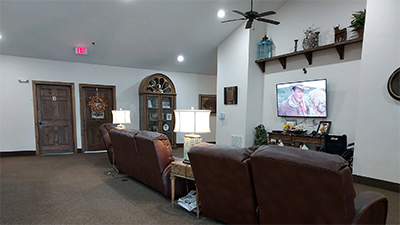
The art is in using options without stress. A resident may not join a singalong, yet may take pleasure in sitting neighboring with a cup of tea. Someone might decline a team craft yet state yes to an individually visit from an employee. A person coping with dementia may resist an official activity but light up when asked to sort towels or water flowers.
Choice issues since control matters. Numerous older grownups have actually already lost pieces of autonomy with disease, relocation, or changing capacities. Engagement needs to recover a little flexibility, not replace one set of demands with another.
This is one factor the best areas think in regards to invites instead of demands. They provide. They observe. They comply with up later on. Over time, those mild invitations construct trust.
Respite care also depends upon meaningful daily life
Families often utilize respite care when they need a short-term stay for a loved one after surgical treatment, during travel, or while handling a family emergency situation. In those cases, involvement can make the change smoother. An individual that gets here in an unknown setting might really feel uncertain in the beginning, however a straightforward routine, a warm welcome, and a few well-chosen activities can assist quickly.
Respite care is not nearly providing caretakers a break, though that is essential. It likewise gives the older adult a short-lived home that must still feel human and appealing. Also a short keep can be formed by thoughtful activities. A visitor who signs up with coffee hour, attends a mild exercise course, or joins a small conversation group may entrust to a far better impact of senior living than if they had invested the entire remain alone in their room.
That matters because several family members first come across a community with respite care. It ends up being a dry run of sorts. If the setting really feels alive, respectful, and receptive, it can reduce the fear that often borders the concept of a move.
When the activity calendar is not enough
There are areas with long activity schedules and still very little genuine interaction. That happens when the shows is hectic but not personal, loud but not meaningful, or created more for appearances than for homeowners. A full board does not immediately suggest a full life.
Families should be cautious if every occasion seems generic and interchangeable, or if residents appear to be participating since they have no place else to go. The objective is not to keep people inhabited regardless. It is to help them feel seen, valuable, and connected.
I have actually likewise seen the opposite problem, where a neighborhood provides calm, beautiful surroundings yet little structure. That can be equally as tough on locals, particularly those that require regular to feel secure. The balance matters. A thoughtful program gives enough rhythm to support the day without making it feel rigid.
The best senior living environments comprehend that involvement is both set up and spontaneous. An organized activity gives form. A spontaneous conversation, a shared joke, or an employee noticing that a person is having a hard morning offers it heart.
What households can do prior to a move
If you are assisting a parent or spouse take into consideration senior care, maintain involvement in the conversation from the start. Ask the individual what they utilized to delight in. Discuss what still feels feasible now. An individual that used to yard may not have the ability to manage a complete plot, but they may still delight in herbs in a pot. A person that liked church may appreciate devotional services or silent reflection time. Somebody who played an instrument might delight in music also if they no longer perform.
Those details assist neighborhoods personalize care from day one. They additionally assist your loved one feel less like they are being put someplace and extra like they are bringing themselves with them.
If you are comparing senior living near me choices, do not stop at square footage or dining menus. Ask what a typical mid-day seems like. Ask whether residents are mainly viewers or energetic participants. Ask how the area measures whether people are involved, not simply present.
The answers will certainly tell you a great deal.
The real procedure of a community
At its ideal, senior care is not almost assistance with day-to-day jobs. It has to do with assisting people remain to live with passion, function, and self-respect. Activities and interaction are where that guarantee comes to be visible. They show up in the resident that starts strolling to lunch with a next-door neighbor rather than alone. They turn up in the memory care resident that calms during an acquainted track. They appear in the respite care guest that shows up distressed and entrusts to a smile since a person remembered their favorite tea.
Those minutes do not happen by mishap. They originate from staff attention, thoughtful planning, and a genuine regard for the lives individuals have already lived.
A strong community does not ask, "How do we keep citizens occupied?" It asks, "What would make this person feel more like themselves today?" That question modifications everything.
BeeHive Homes of Plainview provides assisted living care
BeeHive Homes of Plainview provides memory care services
BeeHive Homes of Plainview provides respite care services
BeeHive Homes of Plainview supports assistance with bathing and grooming
BeeHive Homes of Plainview offers private bedrooms with private bathrooms
BeeHive Homes of Plainview provides medication monitoring and documentation
BeeHive Homes of Plainview serves dietitian-approved meals
BeeHive Homes of Plainview provides housekeeping services
BeeHive Homes of Plainview provides laundry services
BeeHive Homes of Plainview offers community dining and social engagement activities
BeeHive Homes of Plainview features life enrichment activities
BeeHive Homes of Plainview supports personal care assistance during meals and daily routines
BeeHive Homes of Plainview promotes frequent physical and mental exercise opportunities
BeeHive Homes of Plainview provides a home-like residential environment
BeeHive Homes of Plainview creates customized care plans as residents’ needs change
BeeHive Homes of Plainview assesses individual resident care needs
BeeHive Homes of Plainview accepts private pay and long-term care insurance
BeeHive Homes of Plainview assists qualified veterans with Aid and Attendance benefits
BeeHive Homes of Plainview encourages meaningful resident-to-staff relationships
BeeHive Homes of Plainview delivers compassionate, attentive senior care focused on dignity and comfort
BeeHive Homes of Plainview has a phone number of (806) 452-5883
BeeHive Homes of Plainview has an address of 1435 Lometa Dr, Plainview, TX 79072
BeeHive Homes of Plainview has a website https://beehivehomes.com/locations/plainview/
BeeHive Homes of Plainview has Google Maps listing https://maps.app.goo.gl/UibVhBNmSuAjkgst5
BeeHive Homes of Plainview has Facebook page https://www.facebook.com/BeeHivePV
BeeHive Homes of Plainview has an YouTube page https://www.youtube.com/@WelcomeHomeBeeHiveHomes
BeeHive Homes of Plainview won Top Assisted Living Homes 2025
BeeHive Homes of Plainview earned Best Customer Service Award 2024
BeeHive Homes of Plainview placed 1st for Senior Living Communities 2025
People Also Ask about BeeHive Homes of Plainview
What is BeeHive Homes of Plainview Living monthly room rate?
The rate depends on the level of care that is needed. We do an initial evaluation for each potential resident to determine the level of care needed. The monthly rate is based on this evaluation. There are no hidden costs or fees
Can residents stay in BeeHive Homes until the end of their life?
Usually yes. There are exceptions, such as when there are safety issues with the resident, or they need 24 hour skilled nursing services
Do we have a nurse on staff?
No, but each BeeHive Home has a consulting Nurse available 24 – 7. if nursing services are needed, a doctor can order home health to come into the home
What are BeeHive Homes’ visiting hours?
Visiting hours are adjusted to accommodate the families and the resident’s needs… just not too early or too late
Do we have couple’s rooms available?
Yes, each home has rooms designed to accommodate couples. Please ask about the availability of these rooms
Where is BeeHive Homes of Plainview located?
BeeHive Homes of Plainview is conveniently located at 1435 Lometa Dr, Plainview, TX 79072. You can easily find directions on Google Maps or call at (806) 452-5883 Monday through Sunday 9:00am to 5:00pm
How can I contact BeeHive Homes of Plainview?
You can contact BeeHive Homes of Plainview by phone at: (806) 452-5883, visit their website at https://beehivehomes.com/locations/plainview/, or connect on social media via Facebook or YouTube
Residents may take a trip to the The Museum of the Llano Estacado . The Museum of the Llano Estacado offers regional history exhibits that create an engaging yet manageable outing for assisted living, memory care, senior care, elderly care, and respite care residents.